Gyárfás's tree packing conjecture
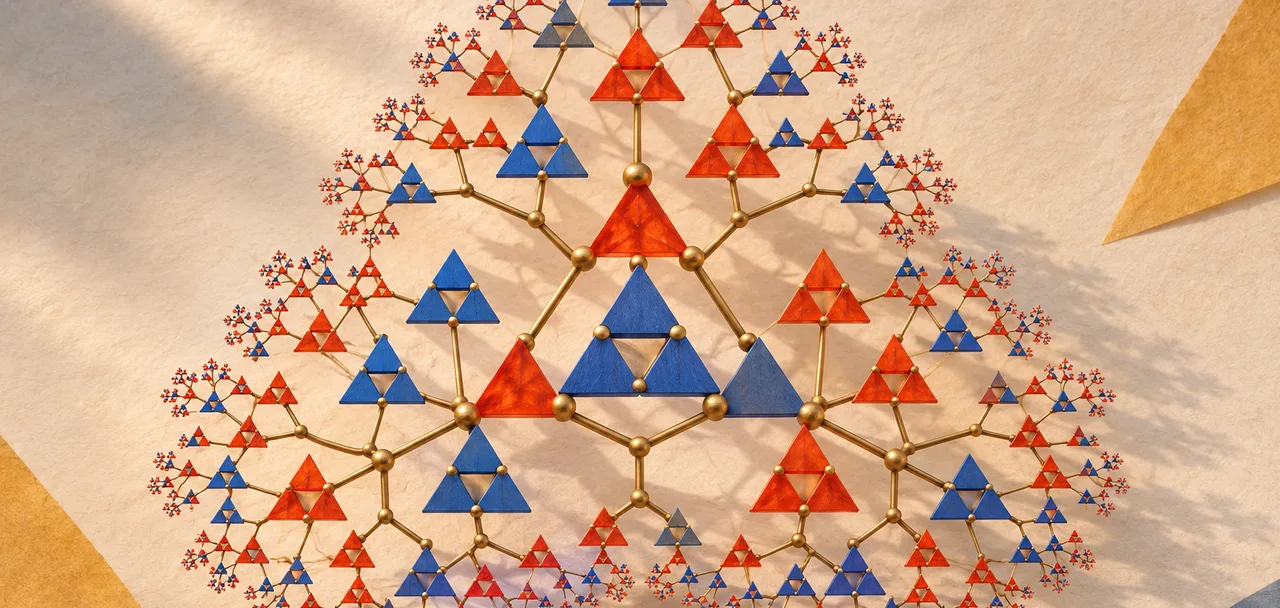
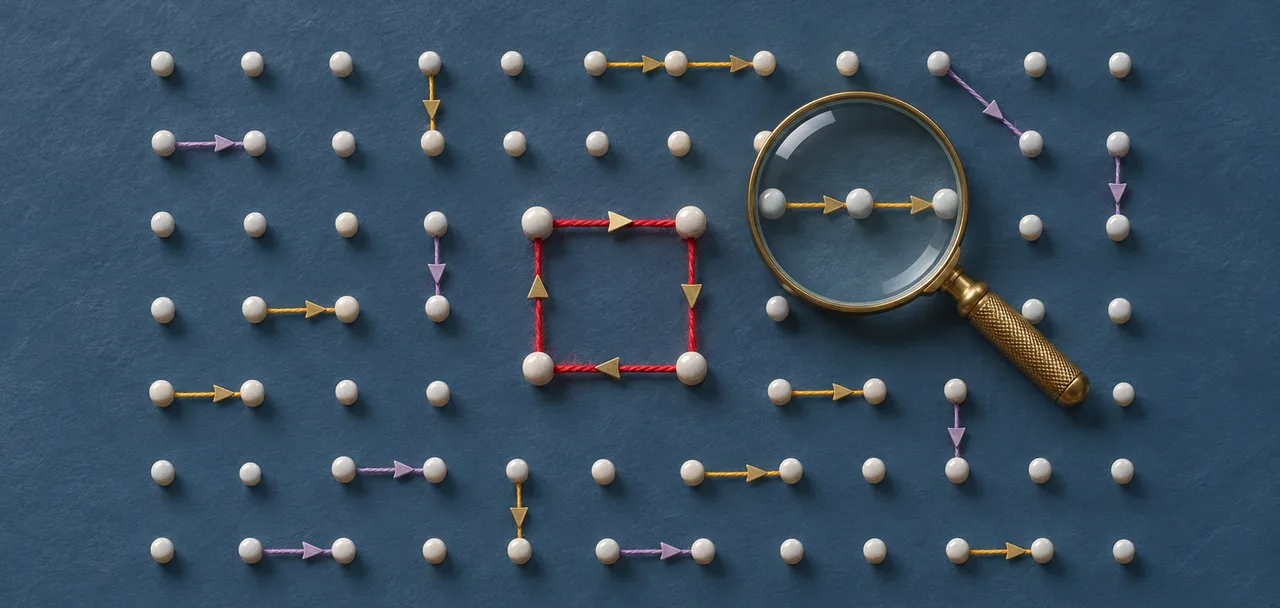
Show that any trees T_2, …, T_n with T_k on k vertices can be packed edge-disjointly into the complete graph K_n.
Openper Erdős Problems, 2026-10-20
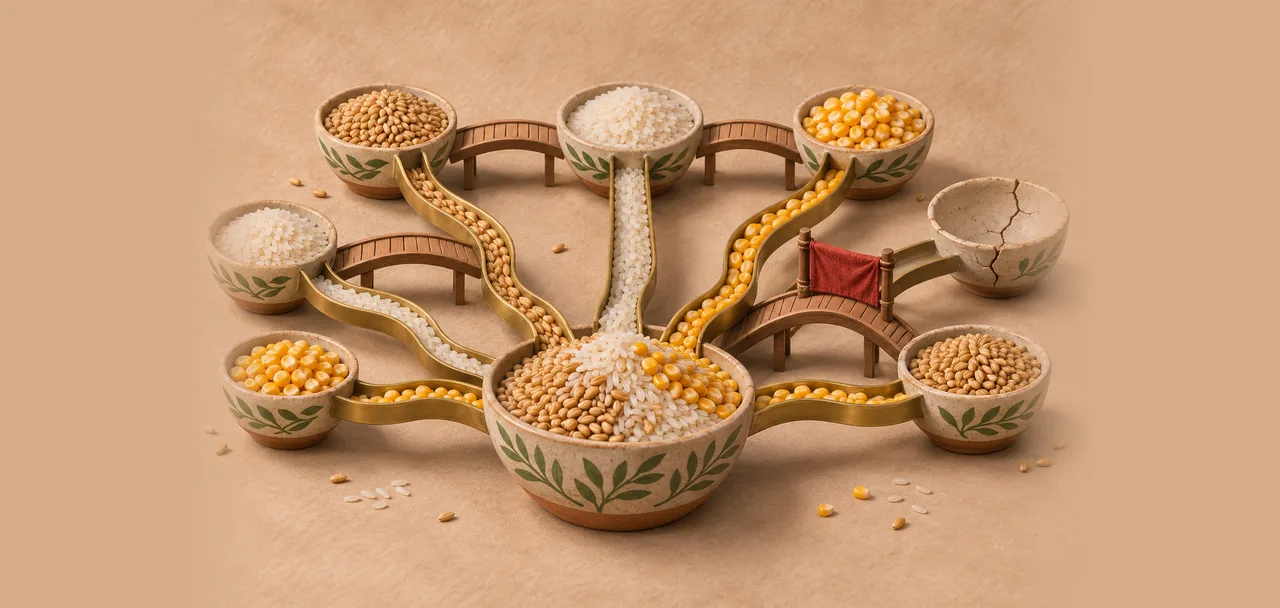
Find trade policies and network structures that let food trade buffer harvest failures, wars and export bans instead of spreading them.
Find a closed form for the mean μ ≈ −1.7710868074 of the Tracy–Widom distribution of the largest GUE eigenvalue.
Is there an exact formula for the critical mass of the Townes soliton, the power above which a laser beam collapses on itself?
Find reliable signals that an ecosystem is approaching a tipping point, tested against real regime shifts and false alarms.
Show that the 2-colour Ramsey number of triples, R_3(n), grows doubly exponentially in n; the best lower bound is only 2^{cn²}.
Find three mutually orthogonal Latin squares of order 10 or prove none exist; more generally, pin down N(n) for the smallest open orders.
Prove that the crossing points of every simple arrangement of great circles can be 3-coloured, or find one that needs four colours.
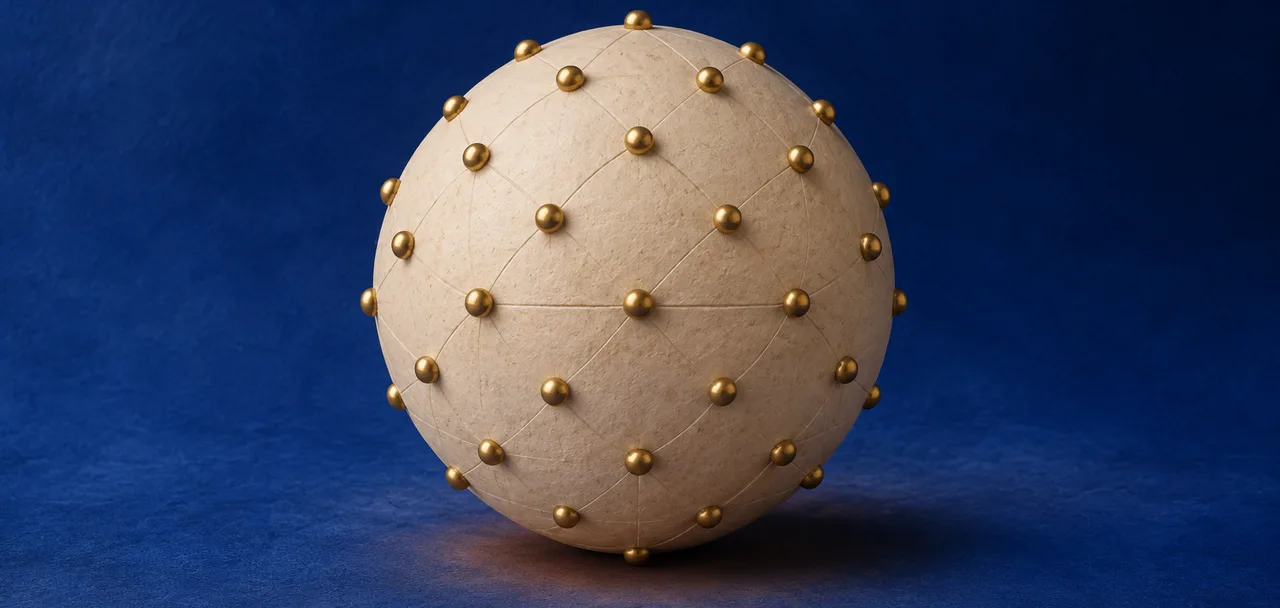
How do N equal charges arrange themselves on a sphere so that their total repulsion is as small as possible?
Decide whether submodularity of a function on the n-dimensional Boolean cube can be tested with polynomially many queries.
Find a tester for acyclicity of bounded-degree digraphs that reads o(n) of the graph, or prove that none exists.
Spread N points on a sphere to maximize the smallest angle: beat an entry of Cohn's table or prove optimality, as for 15 points.
Decide whether the number of stabilizer states needed to write n copies of the T magic state is bounded by a polynomial in n.
Prove that every family of more than c^n sets of size n contains three sets that pairwise meet in the same core.
Show that every finite set of integers has nearly |A|² distinct sums or nearly |A|² distinct products; false over the reals since 2026.
Can 114 be written as a sum of three integer cubes? Every smaller number not ruled out by a simple rule already has been.
Bound how close two sums of k square roots of integers up to n can be, and decide whether such sums can be compared in polynomial time.
Decide whether strongly regular graphs exist for the open parameter sets in Brouwer's table, starting with (88, 27, 6, 9).
Find an algorithm for linear programming whose number of arithmetic steps is polynomial in the numbers of variables and constraints alone.
Find how much space a randomized streaming algorithm needs to approximate the longest increasing subsequence within a constant factor.
Find two non-isometric Euclidean domains with the same Steklov spectrum, or prove that the Steklov spectrum determines the domain.
Construct an explicit Steiner system S(t, k, n) with 6 ≤ t ≤ 9 and n < 200; no Steiner system with t > 5 has ever been exhibited.
Test whether species-abundance and species-area patterns follow from simple statistical constraints, and what ecology adds beyond them.
Raise iron, zinc and provitamin A in staple crops, and show that the extra nutrients reach and benefit the people who eat them.
Find the growth exponent of the largest subset of {1,...,N} with no square difference, now known to lie between 0.7580758 and 1 - c.
Find the limit of F(N)/√N, where F(N) is the fewest marks on a ruler of length N that measures every distance; it lies in [1.56, √3].
Determine whether plant growth is limited by photosynthesis or by cell division and expansion, and how climate change shifts the balance.
Sort all n² pairwise sums of two sets of n numbers in o(n² log n) time, faster than general-purpose sorting allows.
Find which fertiliser and soil management strategies cut nitrous oxide and other nitrogen emissions from farm soils most, without losing yield.
Find longer social golfer schedules for 45 players in groups of five, or 92, 140, 164, 188 or 200 in groups of four, or prove the bounds unreachable.