The smooth four-dimensional Poincaré conjecture
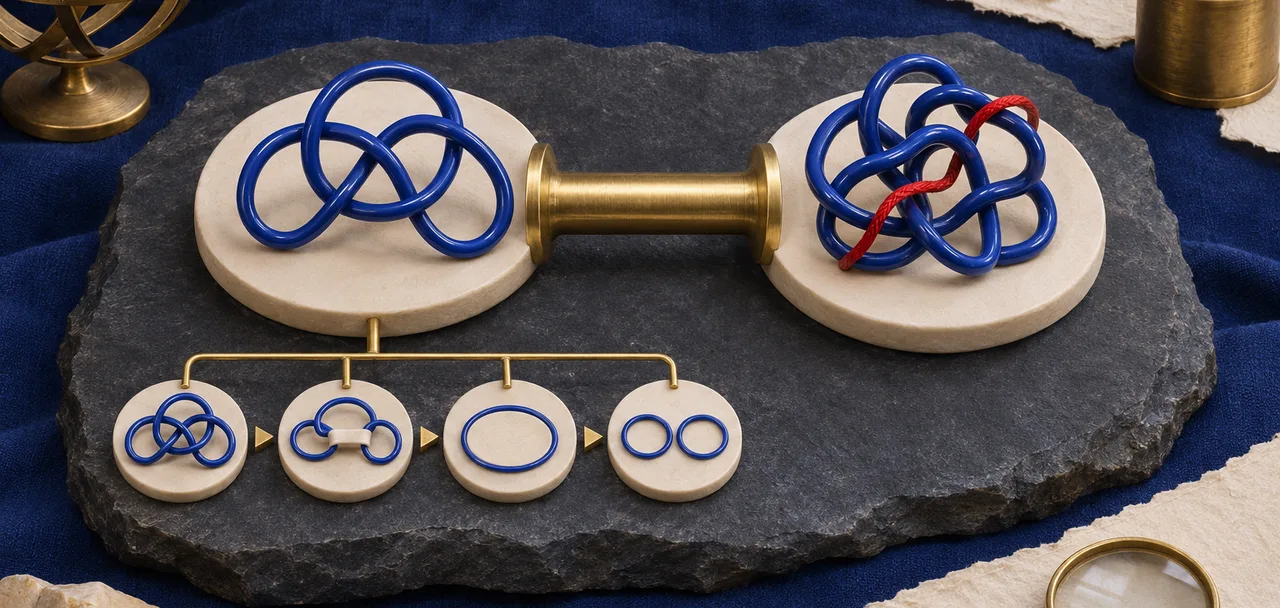
Disprove the smooth 4D Poincaré conjecture with two knots sharing a 0-surgery, one slice and one with a nonzero Rasmussen-type invariant.
Unsolvedper FrontierMath: Open Problems, 2026-10-20
Find the smallest output dimension in which two quantum channels violate additivity of minimum output entropy; it lies between 2 and 182.
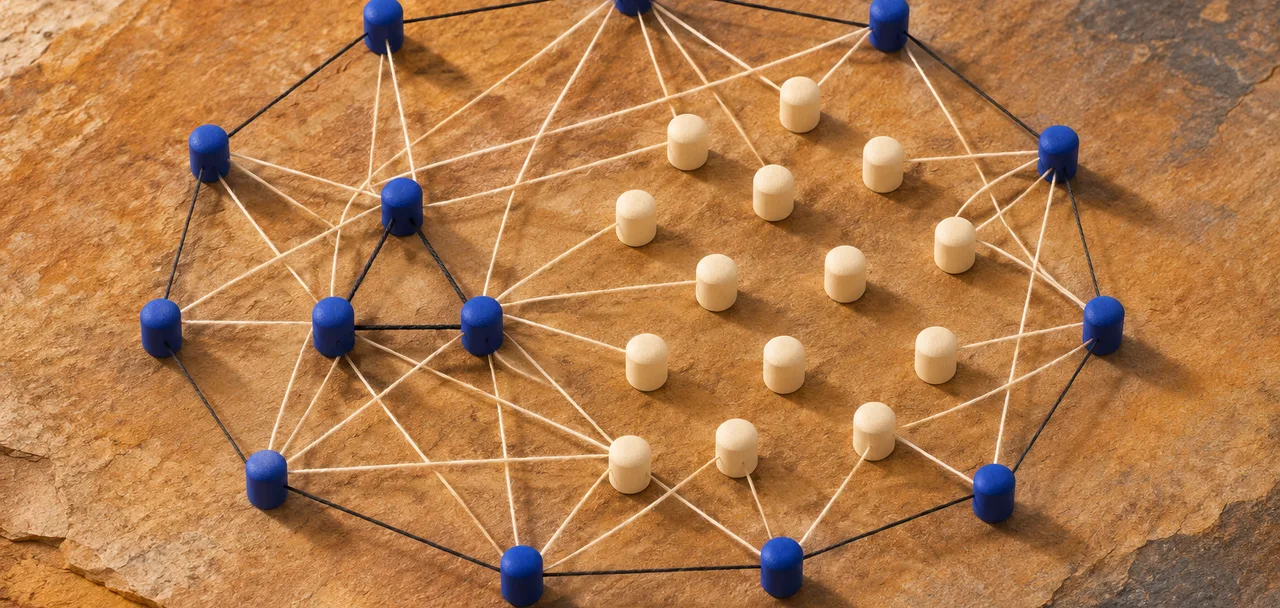
Improve the table of small Ramsey numbers R(k,l), starting with the open cases R(3,10), R(4,6) and R(3,11).
How few multiplications does a 3 × 3 matrix product need? Strassen did 2 × 2 with 7 instead of 8.
Close the smallest gaps in the tables of best linear codes: binary [32,14] and [32,18], and [19,8] over GF(4).
Prove that each of six cubic equations z² + y²z + x³ + … = 0 of size at most 24, the smallest open cases, has infinitely many integer solutions.
Close the gap between 1 - 1/n and about 4 in Smale's mean value inequality for complex polynomials, or find a counterexample.
Find a closed form for the site percolation threshold of the square lattice, p_c ≈ 0.5927460508; bond percolation has p_c = 1/2.
Decide whether, for every t, some number appears as a binomial coefficient C(n,k) with k ≤ n/2 in exactly t ways.
Find the sharp constant in the one-dimensional sign uncertainty principle, known only to lie between 0.2025 and 0.3216.
Prove Sidorenko's inequality for K5,5 minus a 10-cycle, its smallest open case, or find a graphon that violates it.
Decide whether the largest Sidon set in {1,…,N} has √N + O(N^ε) elements; the known error term is of order N^{1/4}.
Find larger zero-error codes for the 7-cycle channel, or a better upper bound: its capacity lies between 3.25883 and 3.3177.
Decide whether O(log M/ε²) copies of an unknown quantum state suffice, in every dimension, to estimate M given measurement probabilities to accuracy ε.
Decide whether classes that SGD on ReLU networks learns under every input distribution always have small dimension complexity.
Characterize the spectra that force every bipartite state with those eigenvalues to be separable, and decide whether a PPT test suffices.
Find sustainable ways to keep or raise food production on salt-affected soils through management, tolerant crops and remediation.
Narrow the ring loading constant, now between 1.119 and 1.3, with harder instances or a sharper proof.
Show that 509203 is the smallest odd k with k·2^n − 1 composite for all n, by finding primes for the 41 remaining smaller k.
Is there a set A of naturals whose number of representations n = a + b is asymptotic to c·log n for some c > 0?
How long do the toughest plant materials, root suberin and the walls of pollen grains, last in farm soil, and what decides it?
Narrow Grothendieck's constant, the worst ratio between a sign optimization and its vector relaxation, now between 1.7136 and 1.7822.
Show that a group of rational matrices with finitely many automorphism orbits is virtually soluble; check two proposed proofs.
Find seven distinct nonzero rationals such that the product of any two, plus one, is a rational square; sextuples are known, septuples are not.
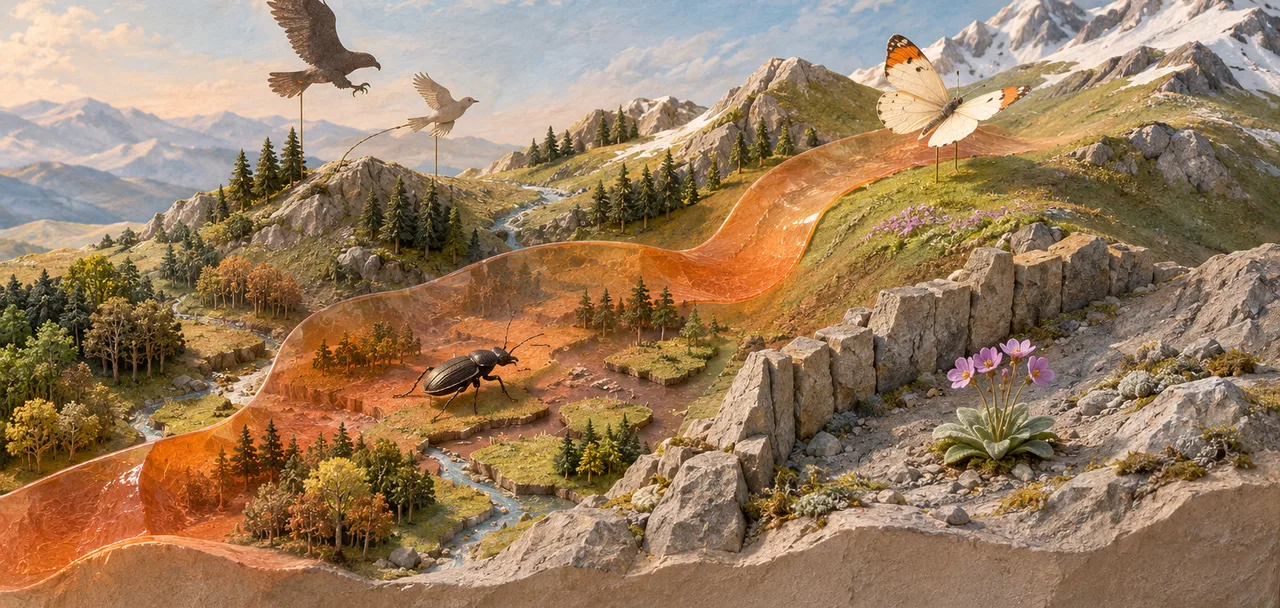
Explain why some species track a warming climate quickly while others lag or move the wrong way, using traits, landscapes and interactions.
Find the constant c in R(3,k) ~ c·k²/log k; it is now known to lie between 1/2 and 1.
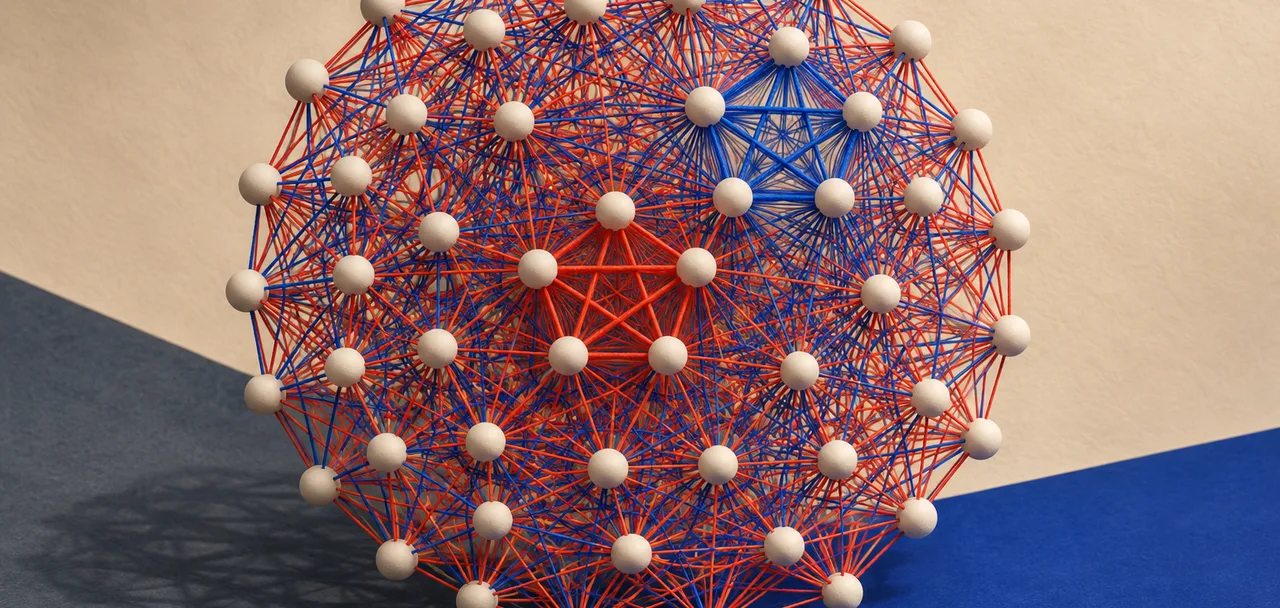
How many people must be in a room to be sure of five mutual friends or five mutual strangers?
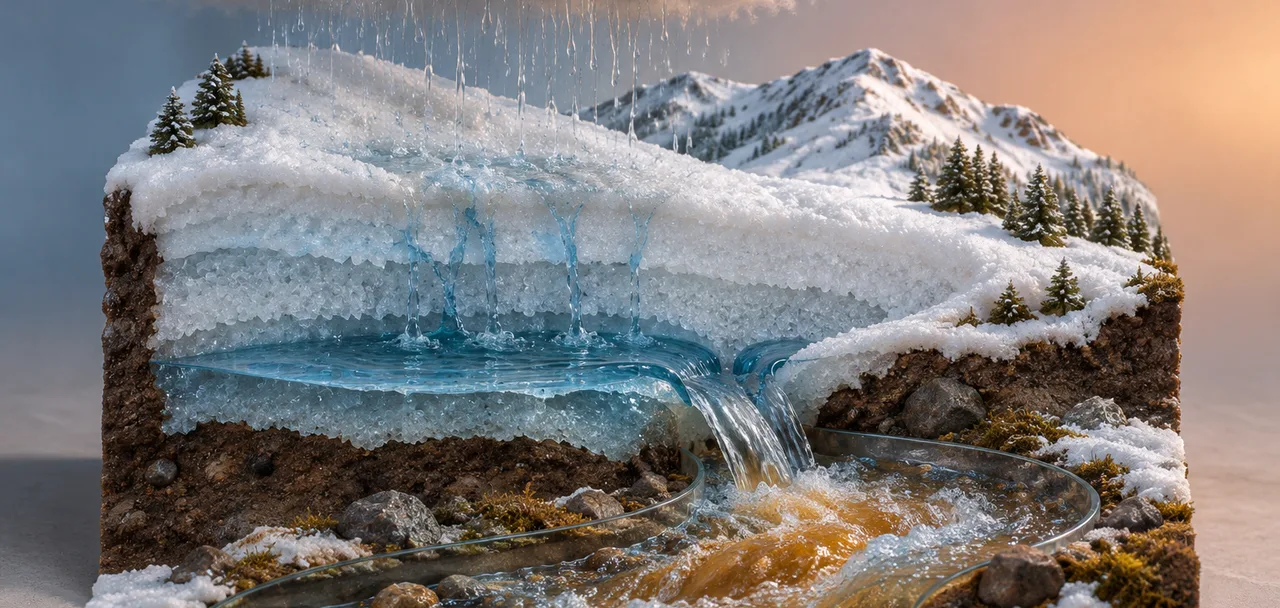
Work out which weather, snowpack and soil conditions turn rain on snow into an exceptional flood, and how warming shifts the risk.
Show that a linear equation that some finite colouring of the integers avoids can be avoided with a number of colours depending only on its length.
Determine the quantum capacity of qubit Pauli channels; even the depolarizing channel's zero-capacity threshold is only known to lie between 0.064956 and 1/12.